Can Hypochlorous Acid Cause Breakouts? What the Science Says

Hypochlorous acid is having a moment in skincare. If you are scanning ingredient labels late at night, you have probably landed on the same question a lot of people ask. Can hypochlorous acid cause acne, or is it actually one of the gentler options on the shelf? It is a fair thing to wonder. Anything new that touches your face deserves a little scrutiny. Here is what the science actually says, without the marketing gloss.
What Hypochlorous Acid Actually Is (and Isn't)
Hypochlorous acid is not a synthetic invention dreamed up for a skincare trend. It is the same molecule your own white blood cells produce as part of the body's normal, protective immune response. Formulators have simply learned how to stabilize that molecule outside the body, inside a water-based product you can apply topically.
That detail matters for the breakout question. Hypochlorous Acid itself starts as a weak acid dissolved in water, not an oil, a wax, or a heavy emollient. That is a very different starting material than the ingredients dermatologists usually flag as pore-clogging culprits.
There is a catch worth knowing, though. On its own, Hypochlorous Acid is notoriously unstable and tends to break down quickly once it is dissolved in water. That is why formulators lean on stabilization methods: a specific pH range, protective packaging, or a gel matrix. The goal is a molecule that stays consistent from the first use to the last. A product that skips this step may not hold up the way its label suggests.
So, Can Hypochlorous Acid Cause Acne? The Short Answer
The honest answer is that Hypochlorous Acid itself is not the type of ingredient known to clog pores. Comedogenic ingredients, the ones dermatologists point to most often, tend to be thick oils, waxes, or heavy silicones that sit on the skin's surface and trap debris underneath. A water-thin, oil-free Hypochlorous Acid solution simply does not behave that way.
That is not a blanket guarantee for every face. Formulas vary between brands. A well-made Hypochlorous Acid product should be fragrance-free and free of added oils. A poorly formulated one could still include something that irritates sensitive skin, or triggers a reaction that looks like a breakout. Individual skin also varies more than any single ingredient can predict.
If you are introducing a new Hypochlorous Acid product, a simple patch test is a reasonable first step. Try it on your jaw or inner arm for a couple of days, the same way you would approach any new addition to your routine.
What the Research Actually Says About Hypochlorous Acid and Breakout-Prone Skin
It helps to separate two different questions here. One is whether Hypochlorous Acid might clog pores, which is a formulation question addressed above. The other is whether it does anything for acne that already exists, and that question belongs with a dermatologist, not a skincare blog.
Dermatology researchers have studied Hypochlorous Acid for years, largely because of its role in the body's own defenses. A 2024 review in the Journal of Drugs in Dermatology traces Hypochlorous Acid back to its origin in the innate immune system. It also notes that stabilized formulas stay chemically consistent only within a fairly narrow, mildly acidic pH range, and that the Hypochlorous Acid breaks down outside that window. That is a formulation detail, not a promise about outcomes. It is a good reminder that not every product labeled "Hypochlorous Acid" behaves the same way once it is sitting in a bottle.
Some small clinical studies have compared Hypochlorous Acid solutions to other topical ingredients for inflammatory skin concerns. The same review is candid that the evidence base is still thin, and that more research is needed before drawing firm conclusions. That is a normal place for a newer skincare ingredient to sit. It also means this article will not tell you Hypochlorous Acid helps or fights breakouts, because the research does not support that claim yet, in either direction.
Why Breakouts Happen in the First Place
Breakouts rarely trace back to one single ingredient. The American Academy of Dermatology points to a mix of factors, including excess oil production, hormonal shifts, genetics, and oily hair or skin care products sitting on the skin.
That mix matters here, because it is easy to blame the newest product in a routine when a breakout shows up. The real driver might actually be a hormone shift, a heavier moisturizer layered underneath, or a pillowcase that is overdue for a wash. Before retiring a gentle, water-based product, it is worth looking at the whole routine, not just the newest addition to it.
Using Hypochlorous Acid on Your Face Every Day
A common follow-up question is whether hypochlorous acid is safe to use every day. For most people, a well-formulated, fragrance-free Hypochlorous Acid product is gentle enough for daily use. It is water-based, not the type of ingredient that builds up on skin the way heavier actives can.
Even so, gentle is not the same as one-size-fits-all. Always follow the directions on your specific product, since concentration and formulation differ between brands. Some are meant to sit on skin, others rinse off, and a few are meant only for specific areas rather than the whole face. If you notice new redness, dryness, or irritation after starting a daily routine, take that as your skin telling you to pull back, not a sign to push through.
Where Cryoluxe Fits Into the Science
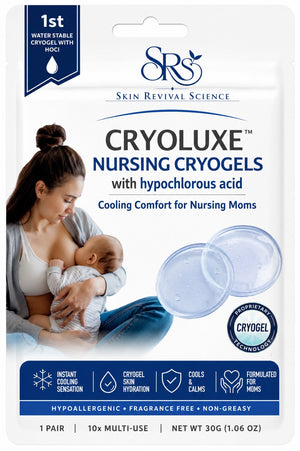
This is exactly the kind of question we hear directly, since Cryoluxe formulates with stabilized Hypochlorous Acid inside a water-rich, water-stable cryogel base rather than a spray or serum. Cryoluxe products are cosmetics, designed to cool, comfort, hydrate, and support the look and feel of healthy skin. They are not intended to diagnose, treat, cure, or prevent any condition.
When to Loop In a Dermatologist
Persistent or worsening acne is a medical conversation, not a skincare-aisle one. If breakouts are deep and tender, leaving marks, or not responding to your usual routine, that is worth a dermatologist visit. They can look at your specific skin and figure out what is actually driving it, whether that is hormonal, product-related, or something else entirely. That is a different kind of expertise than any ingredient explainer can offer, this one included.
Hypochlorous Acid's reputation as a gentle, water-based ingredient holds up under a closer look. It is not built like the ingredients known to clog pores, and it does not undo the ones that are already there. Somewhere between those two facts sits the honest answer: a reasonable, low-risk addition to a routine, worth evaluating the same way you would evaluate anything new that touches your skin.
Frequently Asked Questions
Can hypochlorous acid cause breakouts?
Hypochlorous Acid is a water-based, oil-free molecule, not the type of ingredient known to clog pores. Most breakouts trace back to other factors, like hormones, oil production, or heavier products layered on top. Individual skin still varies, so patch-test a new Hypochlorous Acid product first, especially if your skin reacts easily to new things.
Is it bad to use hypochlorous acid every day on your face?
For most people, a well-formulated, fragrance-free Hypochlorous Acid product is gentle enough for daily use, since it is water-based rather than oil-based. Always follow your specific product's directions, since formulas vary by brand. Stop and reassess if you notice new redness, dryness, or irritation after adding it to your routine.
What does research say about Hypochlorous Acid and breakout-prone skin?
Dermatology researchers have studied Hypochlorous Acid mostly for its role in the body's own immune response, and some early clinical research has compared it to other topical ingredients. The evidence base is still limited, so none of this is an efficacy claim. Persistent acne is worth discussing directly with a dermatologist.