Good Latch vs Bad Latch: How to Tell the Difference

By the third or fourth feed of the day, most new moms have a hunch about whether things feel right. Good latch vs bad latch might sound like something only a lactation consultant can spot, but there are visible, checkable cues that do not require any special training. A good latch tends to look and feel a certain way: wide mouth, flanged lips, chin pressed into the breast, steady comfort. A shallow latch usually looks and feels different, often in ways that are easy to miss during the first few weeks. Here is how to tell the difference, and what to do about it.
What a Good Latch Looks Like
A good latch has a handful of consistent signs, and once you know what to look for, they are easy to check mid-feed.
- Wide mouth. Baby's mouth opens broadly around the breast, closer to a yawn than a nibble, not just around the nipple.
- Flanged lips. Both lips turn outward against the breast, similar to a fish, instead of tucking inward.
- Chin contact. Baby's chin presses firmly into the breast, often with the nose lightly touching or just clear of it.
- Areola coverage. Baby takes in a good portion of the areola, not only the nipple tip, so you can usually see more of the darker skin above the top lip than below the bottom one.
Cleveland Clinic's breastfeeding guidance describes this same picture: a wide-open mouth, most of the lower areola covered, and the chin resting against the lower breast. You will hear it too. A good latch usually sounds like soft, rhythmic swallowing, sometimes pausing every few sucks as milk lets down. Baby's cheeks stay full and rounded instead of caving in with each pull, and the position feels stable rather than like baby is sliding toward the nipple.
What a Bad (Shallow) Latch Looks and Feels Like
A shallow latch is more common than it might seem, especially in the early weeks, and it tends to announce itself in a few specific ways.
- A pinching feeling right as baby latches, and sometimes through the whole feed, rather than a brief tug that eases.
- A nipple that looks flattened, creased, or lipstick-shaped right after baby comes off the breast, instead of round.
- Clicking or smacking sounds during the feed, usually a sign baby is losing and regaining suction instead of staying latched.
- Baby slipping down toward the nipple partway through, so you find yourself repositioning again and again.
- Skin that still feels tender or uncomfortable well after the feed ends, not just in the moment.
None of these mean something is wrong with you or your baby. A shallow latch is often just a mouth that has not opened quite wide enough, or a position putting more pressure on one spot than it should. It is common, and a few adjustments usually make a real difference.
Good Latch vs Bad Latch at a Glance
| Sign | Good latch | Bad (shallow) latch |
|---|---|---|
| Mouth | Wide open, like a yawn | Open only a little |
| Lips | Flanged outward | Tucked in or pursed |
| Chin | Pressed into the breast | Not quite touching |
| Areola | Good portion in baby's mouth | Mostly nipple only |
| Sound | Steady, rhythmic swallowing | Clicking or smacking |
| Skin feel | Comfortable, maybe a light tug | Pinching or tender |
How to Adjust a Shallow Latch
If a feed starts to feel shallow, you do not have to sit through it. Breaking the latch and starting again is always an option, and it gets easier with practice.
- Break suction gently. Slide a clean finger into the corner of baby's mouth, between the gums, until you feel the seal release. Pulling baby off without breaking suction first can tug on already tender skin.
- Reset the position. Bring baby's whole body in close, tummy to tummy, with their nose level with the nipple rather than pointed straight at it.
- Wait for a wide mouth. Let baby's top lip brush the nipple and wait for a wide, open mouth, similar to a yawn, before drawing them onto the breast.
- Aim chin first. Guide baby onto the breast chin first, head tipped back slightly, so the chin and lower jaw land before the nose.
- Check and repeat. If it still feels shallow, break the latch again and try a different hold, like a cross-cradle or football hold, until it feels more comfortable.
The NHS's latching guidance follows the same order: body close, mouth open wide, chin first, nose clear. Small changes in position often make a bigger difference than expected. A slightly different angle, firmer support under baby's body, or simply trying again after a pause can turn a shallow latch into a deep, comfortable one.
When to Check In With a Lactation Consultant
Most latches improve with practice and a few small adjustments. But some signs are worth a second set of trained eyes sooner rather than later.
Reach out to an IBCLC (International Board Certified Lactation Consultant) or your healthcare provider if:
- Skin stays uncomfortable or tender well past the first couple of weeks, even after trying different positions.
- The same pinching feeling shows up at every feed, no matter what you adjust.
- Baby seems frustrated at the breast, arches away, or has trouble staying latched for more than a few seconds.
- You are not sure baby is getting enough milk, based on wet diapers, weight checks, or feeding patterns.
- Something about the way a feed feels just does not sit right with you.
A lactation consultant can watch a full feed and check baby's mouth and tongue movement. They often spot small mechanical issues that are hard to see from inside the feed itself. There is no such thing as a question too small to ask, and getting support early tends to make the weeks ahead easier, not just the next feed.
Comfort Between Feeds
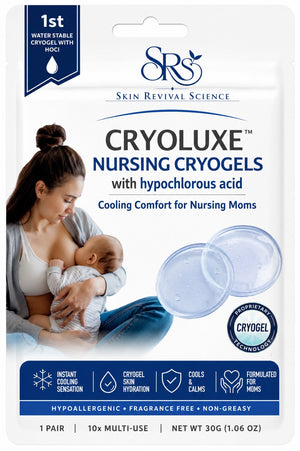
Even a latch that is steadily improving can leave skin feeling tender by the end of a long day of feeds. That is a normal part of the adjustment period, not a sign that something is wrong. Many moms find that a few quiet minutes of cooling comfort between feeds helps skin feel calmer while a latch keeps improving. That might be a cool cloth or a reusable pad like Cryoluxe's Nursing Cryogels.
Cryoluxe products are cosmetics, designed to cool, comfort, hydrate, and support the look and feel of healthy skin. They are not intended to diagnose, treat, cure, or prevent any condition.
Good latch vs bad latch is rarely a mystery once you know the signs to check: a wide mouth, flanged lips, chin contact, and steady, comfortable feeds. If a feed regularly feels shallow, gentle adjustments and, when needed, a lactation consultant can help it feel different. Give yourself the same patience you are giving baby. Most nursing pairs get there.
Frequently Asked Questions
How do you know if your latch is good or bad?
A good latch looks and feels different from a shallow one. Baby's mouth opens wide around the breast, lips flange outward, and the chin presses into the breast, with steady swallowing you can hear. A shallow latch often causes a pinching feeling and leaves the nipple looking flattened or creased right after a feed.
Why does breastfeeding still feel uncomfortable even with a good latch?
Nursing skin can feel tender in the first weeks even with a solid latch, simply because it is adjusting to a new routine. That sensitivity often eases within a couple of weeks. If discomfort stays sharp or shows up at every single feed, it is worth having the latch checked by an IBCLC.
How do you improve a shallow latch while breastfeeding?
Break the latch gently by sliding a finger between baby's gums, then reposition with baby's tummy against yours and nose level with the nipple. Wait for a wide, yawning mouth before drawing baby on chin first. Small changes, like switching to a different hold, often turn a shallow latch into a deeper, more comfortable one.
What does breastfeeding feel like with a good latch?
A good latch generally feels like a firm tug or pulling sensation at first, easing within the first minute as milk starts to flow. It should not feel sharp or pinching through the feed. Cheeks stay full and rounded, swallowing is audible, and skin should feel fine, not sore, once the feed ends.