Itchy Breasts While Nursing: Why It Happens and Gentle Comfort

Itchy breasts while nursing catch a lot of new moms off guard. The itch can show up out of nowhere between feeds, and it is rarely anything to worry about. Skin that stretches, sweats, and stays covered by fabric most of the day is skin that itches sometimes. Most causes are simple, and a few small comfort habits can help settle it down.
Why Itchy Breasts Happen While Nursing
Milk-making tissue changes shape constantly while you are nursing. Breasts can feel fuller in the morning and softer later in the day, and that shift stretches the skin covering them over and over. Skin that stretches often responds with an itch, the same way it can during pregnancy as a belly grows.
Hormones add another layer. Levels shift a great deal in the weeks after birth, and that shift can leave skin drier and more reactive than it was before pregnancy. Drier skin itches more easily, especially somewhere that already gets this much daily wear.
Plain dryness plays a role too. Frequent feeds mean frequent contact with milk, damp pads, and washing, and all of that contact strips a little moisture from the skin's surface each time. Without something to replace it, skin starts to feel tight and itchy rather than soft.
Sweat, Heat, and Fabric Friction Under Nursing Bras and Pads
Nursing bras and pads stay in contact with skin most of the day, and that near constant contact creates its own kind of itch. Heat and sweat build up underneath, especially in warm weather or a well insulated nursing bra, and trapped moisture on skin is a reliable way to trigger an itch.
Friction adds to it. UnityPoint Health points to bra bands and underwire rubbing against skin as a common cause of red, bumpy irritation, often right where a bra sits snug against the body. A pad that shifts throughout the day, or a bra that runs a little tight, can rub the same spot for hours without you noticing until the itch sets in.
Some moms find that a physical barrier between skin and fabric helps more than switching pad brands. That is part of the appeal behind tools like silver nursing cups, which sit between tender skin and clothing instead of soaking against it the way a pad can.
Why Only One Breast Might Itch More Than the Other
It is common for one side to feel itchier than the other. A baby often favors one side, which means that breast handles more feeds, more moisture from pads, and more friction from a bra cup than the other. A nursing pillow angle or a bra cup that sits a little differently on one side adds friction the other side never gets.
None of this points to anything wrong. It is usually just a matter of uneven daily wear, and it tends to even out as feeding patterns shift.
Letdown Tingling: When "Itchy" Is Really a Sensation of Milk Flowing
Some moms notice an itch-like feeling in the seconds right before milk lets down. That sensation is not really about the skin's surface at all. It comes from oxytocin telling the milk ducts to contract and push milk toward the nipple.
Cleveland Clinic notes that letdown sensations vary a lot from one mom to the next, ranging from nothing noticeable at all to a distinct tingling or prickling feeling. For some moms, that prickle reads more like an itch, and both are considered normal parts of how the letdown reflex feels.
Gentle Comfort for Itchy, Tender-Feeling Nursing Skin
A few simple habits go a long way toward calming itchy, sensitive nursing skin:
- Moisturize with something fragrance-free. A plain, fragrance-free lotion or cream after a shower helps replace moisture that feeds, pads, and washing strip away.
- Reach for breathable cotton. Cotton nursing bras and pads let air move instead of trapping heat and sweat against the skin all day.
- Rinse off sweat when you can. A quick rinse with cool water after a warm day removes irritants before they have a chance to build up.
- Skip harsh, heavily scented soap. Strong soaps and body washes strip natural oils that already-stressed skin needs to hold onto.
- Try something cool. A brief cool compress calms an itch fast, the same idea behind cooling comfort for nursing: cold has a naturally calming effect on skin that feels overworked.
None of these habits require anything complicated. Small, consistent changes tend to help more than one big overhaul.
Where Cooling Comfort Fits In
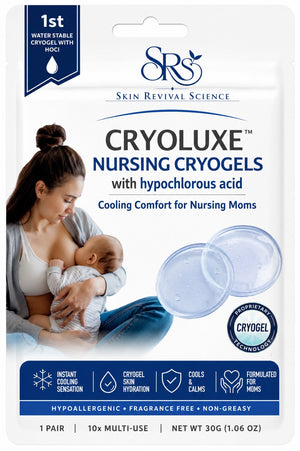
This is where Cryoluxe's Nursing Cryogels come in. Each pad is built from a water-stable cryogel infused with Hypochlorous Acid. It delivers cooling comfort on contact for skin that feels itchy, tender, or overworked from a long day of nursing, with no clips, no straps, and nothing sticky left behind.
Pads are reusable up to 10 times and need no refrigeration, though many moms like to chill the pouch ahead of time for an extra cool feel. Open it, apply it, relax for five to twenty minutes, then rinse and return it to its resealable pouch.
Cryoluxe products are cosmetics, designed to cool, comfort, hydrate, and support the look and feel of healthy skin. They are not intended to diagnose, treat, cure, or prevent any condition.
When to Check In With Your Provider
Most itchy nursing skin has a simple explanation like the ones above, and it settles down once dryness, heat, or friction gets addressed. Every so often, though, itching shows up alongside other signals worth a quick check with your provider.
Reach out if you notice warmth in one specific area, redness that keeps spreading, or a spot that feels swollen or firm. The same goes for feeling generally unwell or feverish, a sore spot that does not ease up, or a rash that keeps growing. None of these are cause for panic. They are simply worth a conversation with someone who can take a closer look and help you sort out what is going on.
Making Itchy Days More Manageable
Itchy breasts while nursing are common enough that most moms deal with them at some point. The reasons are usually simple: dry skin, a warm afternoon, or a bra that fits a little too snug. Gentle habits, fragrance-free moisturizer, breathable fabric, and something cool when skin needs it, handle most of it.
Nursing Cryogels are built for a reusable, no-refrigeration way to bring cooling comfort into the routine. They fit skin that has worked hard and could use a few quiet minutes to settle.
Frequently Asked Questions
What helps itchy breasts while breastfeeding?
A fragrance-free moisturizer after showers, breathable cotton against the skin, and rinsing off sweat on warm days all help. A cool compress calms the itch quickly too. Most nursing skin settles within a few days once dryness, heat, or friction gets addressed directly.
Why is only one breast itchy?
One side often works harder than the other. A baby's preferred side gets more feeds, more moisture from pads, and more friction from a bra cup, all of which can make that skin itchier. A slightly different bra fit or pillow angle adds to the imbalance, and it usually evens out.
Can itchy breasts happen when you're weaning or drying up?
Yes. As milk supply slows, breast tissue changes size and shape again, and skin that stretched to hold more volume can itch as it adjusts back. Keeping skin moisturized during this transition tends to help. It is a normal part of weaning, not a sign anything is wrong.
When should I talk to a provider about breast itching?
Reach out if itching shows up with warmth, spreading redness, a swollen or firm-feeling spot, a rash that keeps growing, or a general feeling of being unwell or feverish. A sore spot that does not ease up is also worth a call. These signs are uncommon, but a provider can check them quickly.