Under-Eye Patches: How They Work and When to Use Them

It's two in the morning, the baby is finally back down, and the mirror is not being kind. An under-eye patch promises a quick reset in the time it takes to brush your teeth. Press it on, let it work while you handle one more thing, then peel it off to a slightly fresher-looking face. Under-eye patches are one of the simplest tools in a bleary-eyed routine, but knowing how they actually work makes it much easier to pick one that earns its five minutes.
What Under-Eye Patches Actually Are
Most under-eye patches fall into one of two categories: hydrogel or bio-cellulose. Hydrogel patches are made from a soft, water-rich gel that molds closely to the curve of the under-eye area. Bio-cellulose patches use a thin sheet grown from fermented plant fibers, which holds even more liquid and drapes tightly against the skin without slipping.
Both formats work as a delivery system rather than a stand-alone treatment. The gel or fiber sheet is soaked in a serum, typically water, humectants, and sometimes caffeine or peptides. It holds that serum against the skin instead of letting it evaporate. The shape of the patch matters as much as what is in it. A patch cut to fit the curve under the eye stays in place for the several minutes it needs to do anything useful. A dab of cream, by contrast, would simply slide or absorb too fast.
How Under-Eye Patches Work
The effect people notice after using an under-eye patch comes from three things working together: cooling, occlusion, and hydration.
Cold is the fastest part. Many patches are stored in the refrigerator, or simply feel cool straight out of the pouch. That temperature drop is part of what makes puffy-looking skin appear calmer within minutes. It is the same instinct behind holding a chilled spoon under tired eyes, just packaged into a shape that actually stays put.
Occlusion is the seal. A hydrogel or bio-cellulose patch presses against the skin and traps moisture underneath it, similar to how plastic wrap keeps food from drying out. That seal is what lets a humectant ingredient do its job instead of evaporating within a minute of application.
Hyaluronic acid is the most common humectant in eye patches, and for good reason. It can bind more than a thousand times its own weight in water, pulling moisture into the surface of the skin and making it look temporarily plumper and smoother. Some patches add caffeine on top of that. Cleveland Clinic dermatology resident Angela Wei has explained that caffeine works as a vasoconstrictor, tightening blood vessels near the surface of the skin. That effect can modestly and temporarily reduce the look of puffiness and redness.
None of these effects are permanent. The plumping from hydration and the tightening from caffeine or cold both fade within a few hours. That's exactly why patches work best as a quick reset rather than a lasting change to how the under-eye area looks.
When to Use an Under-Eye Patch
Under-eye patches fit naturally into a few specific moments rather than a strict daily habit.
- Morning puffy-look. Fluid tends to pool under the eyes overnight, especially after a salty dinner or a short night. A cool patch on waking helps calm that look before the day starts.
- Before an event. A patch about twenty minutes ahead of makeup or a video call gives hydration and cooling time to work. The under-eye area then looks fresher under light or a camera lens.
- After a late-night feed. New moms know this one well. A patch during a quiet moment the next morning is an easy way to counter a short, broken night without adding a step that eats up real time.
There's no rule that a patch has to be a daily ritual. Reaching for one when the under-eye area actually looks tired, rather than on a fixed schedule, gets more value out of each pair.
How Long to Leave Patches On, and How Often
Most under-eye patches are designed to stay on for five to twenty minutes. Shorter than that, and the humectant ingredients don't have enough time to hydrate the skin's surface. Longer than that, and some patches start to dry out, which can pull moisture back out of the skin instead of adding it.
There's no strict rule for frequency. Using patches a few times a week, or whenever the under-eye area looks especially tired, is a reasonable habit for most people. Using them every single day isn't necessary, since the effect is a temporary refresh rather than a change that needs daily reinforcing to hold.
What to Look for When Buying an Under-Eye Patch
A few details are worth checking past the marketing on the front of the box.
- Ingredient list. A humectant like hyaluronic acid or glycerin near the top of the list matters more than a trendy add-in. Caffeine is a reasonable bonus if de-puffing is the main goal.
- Material and fit. A patch that curves naturally under the eye and doesn't slide stays in place long enough to do its job. A flat, stiff patch tends to lift at the corners.
- Single-use versus reusable. Most drugstore and prestige patches are single-use pairs, meant to be thrown away after one session. A smaller number of cryogel-based patches are designed to be rinsed and reused instead.
- Specialty finishes. Gold-foil patches and other decorative finishes look striking, but the shimmer itself is not what calms tired-looking skin. The hydrogel base underneath is doing the real work.
None of this makes single-use patches a bad choice. They're convenient, widely available, and effective for what they are. It's simply worth knowing what's actually happening under the patch before paying extra for gold, silver, or any other finish layered on top.
Where Cryoluxe's Eye Revive in 5 Fits In
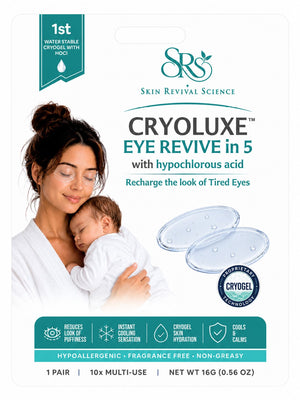
Cryoluxe's Eye Revive in 5 takes the same cooling-plus-hydration idea and builds it around a different base material. It's a five-minute cryogel ritual designed to refresh tired-looking eyes and reduce the look of puffiness, using Cryoluxe's Hypochlorous Acid water-stable cryogel technology instead of a single-use hydrogel or bio-cellulose sheet.
Hypochlorous Acid is the same molecule the body's own white blood cells naturally produce. Most actives like Hypochlorous Acid break down quickly once mixed with water. That's why Cryoluxe built what it calls the 1st water-stable cryogel with Hypochlorous Acid, a proprietary matrix that keeps the active stable through the ritual. The pad itself needs no refrigeration, though it can be chilled ahead of time for an extra-cool feel. Open it, apply it for five minutes, then rinse it with cool water and return it to its resealable pouch. Each pad can be reused up to ten times before it's done.
Cryoluxe products are cosmetics, designed to cool, comfort, hydrate, and support the look and feel of healthy skin. They are not intended to diagnose, treat, cure, or prevent any condition.
Making Under-Eye Patches Part of Your Routine
An under-eye patch is not going to erase a broken night's sleep or a salty dinner, and no patch claims to. What it does is buy a few minutes of cooling and hydration exactly where tired-looking skin shows it the most.
For a five-minute version of that ritual that doesn't end up in the trash after one use, Cryoluxe's Eye Revive in 5 offers a reusable cryogel pad. It's built on the same idea: cool, hydrate, and let the under-eye area look like it got more rest than it did.
Frequently Asked Questions
Do under-eye patches actually work?
Yes, in a limited and temporary way. The cooling, moisture-sealing patch format hydrates and calms the look of puffy, tired-looking skin for a few hours. The effect comes from the format itself, cooling plus humectants, rather than one miracle ingredient, so results vary with patch quality and skin.
How often should I use under-eye patches?
A few times a week is plenty for most people, or simply whenever the under-eye area looks tired. There's no meaningful benefit to daily use, since the plumping and cooling effect is temporary and fades within hours no matter how often the patch goes on.
Do you throw away under-eye patches after use?
Most single-use hydrogel and bio-cellulose patches are meant to be discarded after one session, since the serum they're soaked in is used up by then. Reusable cryogel patches work differently: rinse them with cool water and they're ready to go back on, up to about ten times per pad.
How quickly do under-eye patches work?
The cooling effect is close to instant, within the first minute or two of contact. The hydrating, de-puffing look typically builds over the full five to twenty minutes the patch stays on, then fades again within a few hours afterward.