Breastfeeding Essentials: What to Have On Hand

Somewhere between registry lists, Pinterest boards, and everyone's well-meaning advice, breastfeeding starts to sound like it requires a small warehouse of breastfeeding supplies. Here is the reassuring part buried under all that noise: you do not actually need much to breastfeed. The Breastfeeding Network, a UK lactation support charity, puts it plainly: no special equipment is required. What helps is a short, honest list built around real problems worth solving, not a registry built to look impressive in a nursery photo.
That is the list below, grouped by what each item actually solves, followed by an honest section on what you can skip or wait on entirely.
You Do Not Need Much to Breastfeed
Most breastfeeding supplies you see online fall into one of two categories: things that make a specific moment easier, and things that just add up in a cart. Nursing clothes, covers, pillows, and pumps can all be genuinely useful, but the Breastfeeding Network is clear that none of them are required to feed a baby. A body, a baby, and a place to sit is technically the whole list.
Knowing that upfront changes how you shop. Instead of buying everything a checklist suggests, you can wait, watch what actually feels hard in the first weeks, and add only what solves that specific problem.
Comfort While You Are Feeding
A few basics make the feed itself easier on your body, especially during long stretches in the early weeks.
- A supportive nursing bra that is not tight. Soft, unstructured styles tend to work best before your size settles.
- A pillow you already own. A dedicated nursing pillow can help, but any firm pillow under your arm or baby does the same job at the start.
- A spot with back support. A chair or couch corner where your back and shoulders can relax through a twenty-minute feed matters more than any gadget.
- Water within reach. Thirst tends to hit right as a feed starts, so keep a full glass or bottle wherever you nurse most.
The Breastfeeding Supplies That Help Skin Feel Comfortable
Skin does a lot of work between feeds, and this is where a few purpose-built items genuinely earn their place.
- Nursing pads. Disposable pads are convenient for the first chaotic weeks, while washable ones save money once your routine settles. Many moms keep both on hand and switch as needed.
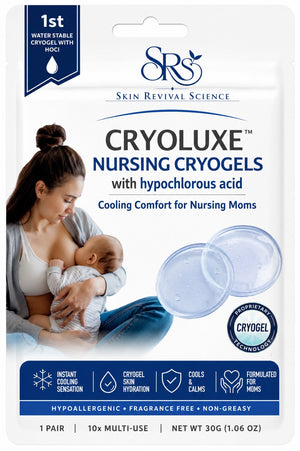
- A cooling option for tender-feeling skin. Between feeds, skin can feel full, tight, or just overworked. Cooling comfort is one of the simplest ways to help it feel calmer. That might be a chilled washcloth, a gel pack, or a reusable pad like Cryoluxe's Nursing Cryogels.
- Breathable layers. Cotton and other breathable fabrics next to the skin reduce friction and trapped moisture compared to tighter synthetic fabrics.
Cryoluxe's Nursing Cryogels are one option worth having on hand for that cooling step. Each pad is a soft, water-rich cryogel with Hypochlorous Acid that conforms to skin without clips, straps, or stickiness. It is reusable up to ten times, and no refrigeration is needed. Cooling comfort starts on contact.
Cryoluxe products are cosmetics, designed to cool, comfort, hydrate, and support the look and feel of healthy skin. They are not intended to diagnose, treat, cure, or prevent any condition.
Practical Extras Worth Keeping Nearby
None of these are complicated, but having them within arm's reach saves a lot of midnight scrambling.
- Burp cloths or muslins. Keep a small stack near every spot you feed, not just in the nursery.
- Easy-access clothing. Button-front shirts, wrap tops, or nursing tanks mean less fumbling during a hungry cry.
- A small light for night feeds. A dim clip-on or plug-in light lets you check a latch without fully waking anyone up.
- Snacks. Simple, one-handed food within reach turns a long feed into a chance to actually eat something.
Situational Gear, Only If It Fits Your Routine
A few items only matter depending on your specific setup. Skip anything here that does not match your actual days.
- A pump and storage bags, if you will be apart from the baby. If bottles or a caregiver are part of your plan, having a pump and a few storage bags ready before you need them removes one source of stress.
- A nursing cover, only if you want one. Plenty of moms nurse comfortably without one. Buy it only if privacy while feeding is something you personally want, not because a checklist says so.
- Nipple shields, only under guidance from a lactation consultant. Shields can help in specific situations, but they do not solve everything on their own. La Leche League GB is clear that a shield cannot correct an underlying latch problem, and it can affect how well a baby transfers milk without proper support. If nursing feels sharp or shallow, a good latch versus a bad latch is usually the real issue, and gear alone will not change that. Talk to an IBCLC before adding a shield to your bag.
What You Can Skip or Wait On
This is the part most checklists leave out, and it is where you can save real money.
- A dedicated nursing pillow, before trying a regular one. Buy the specialty version later only if a household pillow genuinely is not doing the job.
- A full wardrobe of nursing-specific tops, before you know your preferences. Most moms figure out what actually works after a few weeks of trial and error.
- A bottle warmer, before you know if you will need bottles at all.
- Multiple nipple creams or specialty accessories, all at once. Specialty items like silver nursing cups can be worth trying, but pick one thing, use it for a week, and see if it earns a permanent spot before adding another.
- Large stockpiles of anything, before you know your routine. Milk supply, feeding frequency, and what actually helps your skin all shift in the first weeks. Buy small amounts first.
Building Your Own Short List
The honest version of this breastfeeding supplies checklist is short on purpose. A supportive bra, a comfortable spot to sit, nursing pads, and something to help tender skin feel calmer between feeds cover most of what the early weeks actually need. Everything else is worth adding only once you know it solves a real problem you are having, not because it showed up on someone else's registry.
Keep a couple of go-to comfort items within reach. That might be a cool cloth or a reusable pad like Cryoluxe's Nursing Cryogels. Build out from there as you learn what your own routine actually needs.
Frequently Asked Questions
What are the must-have items for breastfeeding?
A supportive nursing bra, nursing pads, a comfortable place to sit with back support, and water within reach cover most of what the early weeks need. Everything else, from covers to pumps, is a personal choice rather than a requirement. Add items only once you know they solve a real problem.
What equipment do you actually need to breastfeed?
Technically, none. Lactation organizations like the Breastfeeding Network confirm that no special equipment is required to breastfeed a baby. Items like nursing bras, nursing pads, and pillows can make specific moments easier, but they are conveniences, not requirements for milk to transfer well.
Do you need nursing pads for breastfeeding?
Not everyone leaks enough to need them, but many moms find pads useful for the first several weeks while a supply regulates. Disposable pads are convenient early on, while washable pads save money once a routine settles. Try a small pack before committing to a large supply.
What can you use if you do not have nursing pads?
A folded, clean muslin cloth or a soft cotton handkerchief tucked into a bra works in a pinch. It is not as absorbent as a purpose-made pad, so change it more often to keep skin dry. A quick errand run or online order solves it if leaking continues.