Does Breastfeeding Feel Sore at First? What's Normal

Somewhere around day three or four, a lot of new moms start wondering the same thing: is this normal? A toe-curling few seconds right as baby latches, skin that feels more sensitive than expected, a tenderness that lingers longer than anyone warned you about. If that sounds familiar, you are not doing anything wrong. Real tenderness in the first couple of weeks of nursing is common, and there is a fairly predictable pattern to what typically eases and when.
What the First Weeks of Nursing Typically Feel Like
For most new moms, the most intense sensation shows up in a narrow window: the first 30 to 60 seconds after baby latches. It can feel like a sharp, toe-curling tug that catches you off guard, then eases into something milder as milk starts to flow. That pattern, brief intensity followed by relief, is one of the most consistent things nursing moms describe in the early days. Nemours KidsHealth describes something similar for parents: a few moments of discomfort right at the start of a feed, easing into just a gentle tug as milk flows.
Between feeds, skin across the chest can also feel more sensitive than usual. It might be tender to the touch, a little more delicate at the surface, or just generally more aware of itself than before pregnancy. That sensitivity tends to be most noticeable in the first week and gradually fades from there. None of this means something has gone wrong. It usually means skin, hormones, and a brand-new routine are all adjusting at once.
Why Does Breastfeeding Feel Sore at First
Three things are typically happening at the same time in those early days.
Skin on the chest is doing something it has never done before, at least not this intensely or this often. Frequent contact, suction, and moisture all add up. Skin naturally takes a little time to adjust to a new routine, the same way feet toughen up after a few days in new shoes.
Hormones play a role too. La Leche League GB notes that for nipples that look and feel otherwise normal, tenderness in the first two weeks after birth is often just hormonal. It tends to settle down within a few days on its own, without needing any special intervention.
Then there is the learning curve. Both mom and baby are figuring out latch together. A mouth that has not opened quite wide enough is one of the most common reasons a feed feels more intense than it should. Small adjustments to position tend to make a noticeable difference.
What Should Ease, and By When
There is a rough timeline most moms can use as a general compass, not a strict rule.
- The first 30 to 60 seconds of a feed may feel intense at first latch. This usually eases quickly once milk starts flowing.
- The first few days often bring the most noticeable overall sensitivity, especially as milk comes in and skin adjusts to frequent feeds.
- The first 1 to 2 weeks is the general window where tenderness related to hormones and a new routine tends to settle down on its own.
- Beyond 2 weeks, soreness that stays sharp, shows up at every single feed, or seems to be getting worse is worth a closer look. Usually the latch is the first place to check.
Everyone's timeline looks a little different, and that is normal too. The general direction matters more than the exact day: things should be trending toward more comfortable, not staying flat or getting more intense.
Comfort Habits Between Feeds
A few small habits can make the adjustment period feel more manageable while skin and routine settle in.
Loose, breathable fabrics help more than people expect. A snug bra or a top that presses against sensitive skin all day adds friction on top of tenderness that is already there. Cotton or other soft, breathable materials give skin room to settle between feeds instead of staying under constant pressure.
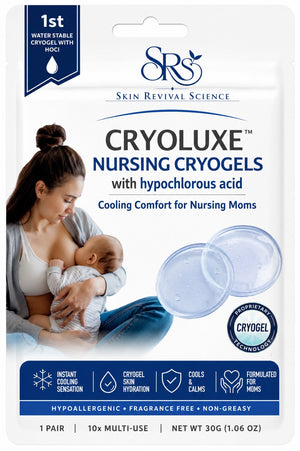
Gentle care matters too: pat skin dry rather than rubbing after a shower, and avoid scrubbing at any tender areas. A little cooling comfort between feeds can also help skin feel calmer between nursing sessions. That might be a cool cloth or a reusable pad like Cryoluxe's Nursing Cryogels.
Cryoluxe products are cosmetics, designed to cool, comfort, hydrate, and support the look and feel of healthy skin. They are not intended to diagnose, treat, cure, or prevent any condition.
When Soreness Signals It's Time to Adjust the Latch
Tenderness does not always follow the general pattern above. It might stay sharp through the whole feed, or show no sign of easing after the first couple of weeks. When that happens, the latch is usually the first thing worth a closer look.
A latch that is a little too shallow is one of the most common, and most correctable, reasons feeds keep feeling more intense than expected. Learning the visible signs of good latch vs bad latch, like mouth openness, lip position, and how much areola baby takes in, gives you something concrete to check mid-feed. That beats just hoping things improve on their own. Small position changes often make a bigger difference than they seem like they should.
When to Check In With a Lactation Consultant or Provider
Most nursing pairs settle into a comfortable rhythm within the first couple of weeks. But a few signs are worth mentioning to an IBCLC (International Board Certified Lactation Consultant) or your healthcare provider sooner rather than later:
- Soreness that stays intense through the entire feed, not just the first moments of latch.
- Sensations severe enough that you find yourself dreading the next feed.
- No real improvement after trying a few different latch positions over a week or more.
- Skin that looks noticeably different than usual, such as unusual redness or texture changes that do not fade between feeds.
- A general sense that something about how feeds feel does not sit right with you.
None of these mean you are doing something wrong. They just mean a trained set of eyes on a full feed can spot small mechanical issues that are genuinely hard to catch from the inside. Getting support early tends to make the following weeks easier, not just the next single feed.
Nursing tenderness in the first weeks is common, and it usually follows a fairly predictable arc. Expect it to be most intense in the first moments of latch, then gradually ease over the following days, mostly settling within a couple of weeks. Give yourself the same patience you are giving baby while everyone learns. If something feels off longer than it should, an IBCLC is there for exactly that kind of question.
Frequently Asked Questions
Does breastfeeding feel sore the first time?
Many moms feel a brief, intense sensation in the first 30 to 60 seconds of that very first latch. This is common as skin and baby's mouth adjust to each other, and it typically eases quickly once milk starts flowing. If it stays sharp through the whole feed, the latch is worth a second look.
Is breastfeeding supposed to feel uncomfortable?
Some tenderness in the first 1 to 2 weeks is common, especially right at latch-on, as skin, hormones, and a new routine all adjust together. It should not stay intense through an entire feed or get worse over time. If it does, checking the latch or talking to an IBCLC usually helps.
How long does early nursing soreness typically last?
For most moms, general tenderness eases within the first 1 to 2 weeks as skin adjusts and latch improves with practice. The most intense moment tends to be just the first 30 to 60 seconds of each feed early on. Soreness lasting well beyond 2 weeks is worth checking in about.
When should I see a lactation consultant about sore nursing skin?
Reach out if soreness stays sharp through whole feeds, worsens instead of easing, or lasts more than 2 weeks despite latch adjustments. Also check in if skin looks noticeably different, or you find yourself dreading feeds. An IBCLC can watch a full feed and spot what is easy to miss from the inside.