Night Sweats After Pregnancy: Why They Happen and Skin Comfort

It is three in the morning, and you are wide awake before your baby even makes a sound. Your shirt is soaked through, your sheets feel damp, and for a second you wonder if something is wrong. Night sweats after pregnancy catch a lot of new moms off guard this way, especially in the first few weeks home. The good news is that sweating at night after pregnancy is one of the most normal, well understood parts of early recovery. There is a lot you can do to keep your skin comfortable while your body works through it.
Why Night Sweats Happen After Pregnancy
The shift comes down to hormones and fluid, and both move fast right after delivery. Estrogen and progesterone drop sharply once the placenta is delivered, and that drop is one of the main triggers behind postpartum sweating. At the same time, your body is working to release the extra fluid it held onto to support pregnancy. Sweating is one of its main exit routes, alongside more frequent trips to the bathroom.
At Nebraska Medicine, OB-GYN Mary Kinyoun describes the shift bluntly. Right after delivery, estrogen falls fast, and for some new moms that means waking up needing to change both pajamas and sheets. It is a big, sudden change for your body to process, so a strong reaction like this is expected rather than unusual.
None of this means anything is wrong. It is simply your body resetting after nine months of pregnancy, and sweat is one of the more visible signs of that reset.
How Long Night Sweats Usually Last
Night sweats are common enough that you are far from alone in dealing with them. Tommy's puts a number on it: up to 1 in 3 people notice night sweats or hot flushes in the weeks after having a baby. Hormonal shifts are most often the reason why.
For most moms, sweating is heaviest in the first one to two weeks home, then it eases gradually as hormone levels settle. Many notice it smoothing out by around six weeks, in step with the rest of early postpartum recovery. It can take a little longer if you are breastfeeding, since hormone levels stay in more flux while your milk supply gets established.
There is no single timeline that fits everyone. Some moms barely notice it past the first week, while others deal with damp sheets for a month or more, and both are normal.
What All That Sweat Does to Your Skin
This is the part that rarely gets mentioned: all that sweating has a real effect on your skin, on top of the hormones causing it. Sweat carries salt, and salt sitting against skin for hours, especially skin that already feels sensitive after birth, tends to leave it feeling tight, prickly, or irritated by morning.
Damp fabric adds friction on top of that. A shirt or sheet that stays wet against your skin all night rubs with every roll and shift in your sleep. That combination of salt and friction is a common reason skin feels raw after a sweaty night. It is not serious, but it is worth addressing rather than waiting it out.
Skin Comfort Tips for Sweaty Nights
A few small habits go a long way toward keeping your skin comfortable while the sweating settles down:
- Rinse off sweat promptly. A quick rinse with cool water clears away salt before it has time to irritate your skin. This works whether you do it in the morning or in the middle of the night after waking up soaked.
- Reach for breathable cotton. Cotton pajamas and cotton sheets let air move instead of trapping heat and moisture against your skin all night.
- Keep a towel over your sheet. Laying a towel across your side of the bed makes a soaked-through night much easier to deal with. Swap the towel instead of stripping the whole bed at 3 a.m.
- Keep the room cool. A fan or a cracked window helps your body regulate its temperature without working as hard to cool itself through sweat.
- Stay hydrated. Drinking water throughout the day supports your body as it works through fluid shifts and replaces what you lose through sweat.
- Cleanse gently and skip fragrance. Harsh, heavily scented soap strips natural oils that already-sensitive skin needs to hold onto. The same gentle, fragrance-free approach that works for a postpartum perineal wash works well here too.
None of these habits are complicated. A few consistent changes tend to help more than one big overhaul.
Sweat Under the Breasts and Around a Nursing Bra
If you are nursing, there is one spot worth extra attention: the skin under your breasts and anywhere a nursing bra sits snug against your body. Sweat collects there easily, especially overnight, and it does not evaporate the way sweat does on more exposed skin. Add fabric rubbing against damp skin for hours, and that combination is a common source of irritation in an area already working hard.
This overlaps with what shows up in itchy breasts while nursing, where heat, sweat, and fabric friction are named causes too. Night sweats simply add more moisture to the mix. A breathable cotton nursing bra helps, along with a quick rinse when you can manage it. Getting out of a damp bra sooner rather than later keeps that skin more comfortable too.
Where Cooling Comfort Fits In
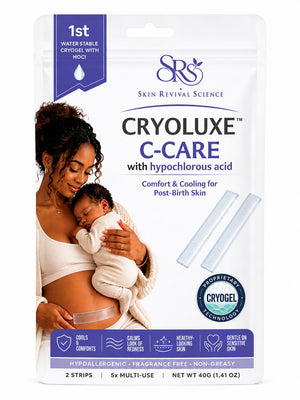
This is where Cryoluxe's C-Care cryogels can help, in a small way. Each pad is a water-stable cryogel infused with Hypochlorous Acid, built to deliver cooling comfort on contact for skin that feels warm, damp, or overworked. That can mean a sweaty night or just the general work of early recovery. There are no clips, no straps, and nothing sticky left behind.
Pads are reusable up to 10 times and need no refrigeration, though many moms like to chill the pouch ahead of time for an extra cool feel. Open it, apply it, relax for five to twenty minutes, then rinse and return it to its resealable pouch. It will not stop the sweating itself, since that is hormones doing their job, but it can make an overheated moment feel more comfortable.
Cryoluxe products are cosmetics, designed to cool, comfort, hydrate, and support the look and feel of healthy skin. They are not intended to diagnose, treat, cure, or prevent any condition.
When to Check In With Your Provider
Most postpartum night sweats settle on their own and do not need any special care. Check in with your provider if sweating comes along with a fever, chills, or generally feeling unwell, since those signs are worth a closer look. The same goes if heavy sweating is still showing up well past the early weeks with no signs of easing. Trust your own read on what feels off rather than calm, and do not hesitate to ask.
Getting Through the Sweaty Nights
Night sweats after pregnancy are uncomfortable, but they are also temporary and expected. Your hormones are resetting, your body is releasing fluid it held onto for nine months, and sweating is simply part of that process working itself out. A few consistent habits, cool water, breathable cotton, a towel within reach, go a long way toward keeping your skin comfortable while you wait it out.
Give yourself the same patience you would give any other part of early recovery. The soaked shirts and stripped sheets are a phase, not forever.
Frequently Asked Questions
How long do night sweats last after giving birth?
Night sweats are usually heaviest in the first one to two weeks after birth, then ease gradually over the following weeks as hormone levels settle. Many moms notice it smoothing out by around six weeks. It can take a little longer while breastfeeding, since hormones shift more slowly during that time.
Why are my postpartum night sweats so bad?
Estrogen and progesterone drop sharply once the placenta is delivered, and sweating is one of the ways your body sheds the extra fluid it held onto during pregnancy. That combination can make sweating feel intense in the early weeks, even if you rarely sweated much at night before pregnancy.
Is it normal to sweat a lot after having a baby?
Yes. Waking up drenched in the early postpartum weeks is common and expected, not a sign anything is wrong. It is simply hormones resetting and your body releasing fluid it retained during pregnancy. If sweating comes with a fever or you feel unwell, check in with your provider.
How do I stop night sweats from irritating my skin?
Rinse off with cool water soon after waking, change into dry cotton layers, and keep a towel over your sheet for backup. A cool room and fragrance-free cleansing help too. None of this stops the sweating itself, but it keeps salt and damp fabric from irritating your skin overnight.