The C-Section Shelf: Why It Forms and Caring for the Skin

A soft fold of skin sitting just above the incision line is one of the most common, least talked about parts of recovering from a C-section. Many moms notice it weeks or months later and wonder what happened, or whether they did something wrong. Nothing went wrong.
The C-section shelf, a gentle overhang of skin above the scar, is a well documented and completely ordinary part of how this kind of birth settles over time. Understanding why it forms makes it much easier to care for the skin there without any pressure to make it disappear.
What Is the C-Section Shelf?
The term describes a soft, shelf-like fold of skin and the tissue just beneath it, sitting above a C-section scar. Some moms describe it as an overhang, a pouch, or a small ledge that catches on the waistband of pants. Others have a scar that sits nearly flat against the body with barely any fold at all.
Both are normal outcomes of the same surgery. The shelf is not a sign that something failed to close properly, and it is not a measure of how well someone took care of themselves afterward. It is simply how skin and the layers beneath it settle after this particular kind of incision.
Why the C-Section Shelf Forms
A C-section incision passes through several layers before reaching the uterus, and one of those layers is a thin sheet of connective tissue called the Scarpa fascia. During closure, this layer is not always rejoined the same way skin and muscle are. Research on the condition describes fat from deeper tissue gradually shifting upward through that gap as the area settles. Over time, the tissue just above the scar can end up sitting slightly higher than the skin right at the incision.
Pregnancy adds another layer to the picture. Skin above the belly button has spent months stretching to make room for a growing baby, so it arrives at surgery already looser than it was before pregnancy. Meanwhile, the scar itself tends to pull tighter as it settles. That contrast, tighter skin right at the incision and looser skin just above it, is a lot of what people are describing when they use the word shelf.
Why Some Moms Notice It More Than Others
How pronounced a C-section shelf looks comes down to a mix of factors, mostly ones a person has little control over. How the deeper tissue layer closed during surgery matters. So does natural skin elasticity, which varies from person to person for reasons that have nothing to do with diet or exercise. The number of prior C-sections plays a role too, since a first surgery and a repeat surgery do not always settle the same way.
Notably, this shows up across body types. Moms who are smaller and moms who are larger both report a C-section shelf. That is a good reminder that it reflects anatomy and how surgery settles, not effort or self-care.
Caring for the Skin Above the Scar
Skin in this area does not need aggressive care to feel more comfortable, just some consistency and patience while the body does its own thing.
- Follow your hospital's cleansing instructions. Most surgical teams recommend rinsing the incision gently with water and patting it dry, without soap or scrubbing, until it has fully closed.
- Choose waistbands that do not press on the area. Loose, soft clothing keeps friction and pressure off skin that is still settling, especially in the first several weeks.
- Add light hydration once the incision has closed. A fragrance-free lotion or gel can help skin above and around the scar feel less tight or dry as it settles.
- Ask about scar massage once you're fully closed. Once the incision is fully closed, usually six to eight weeks out, some people find scar massage helps the skin feel more mobile. Always confirm timing with your provider.
The same unhurried approach that helps elsewhere in early recovery applies here too. Many moms already lean on simple comfort habits, like perineal ice packs for a different kind of tenderness. The skin above a C-section scar benefits from that same gentle pace.
Does the C-Section Shelf Go Away?
For many moms, it softens and becomes noticeably less pronounced over the first six to twelve months, as post-surgical swelling settles and the scar tissue matures. For others, it stays roughly the same well past that window, even with time and consistent skin care. Both outcomes are normal, and neither one reflects how closely someone followed aftercare instructions.
If the shelf ever bothers you enough to want options beyond skin care, that conversation belongs with your OB-GYN or a plastic surgeon. Surgical and medical routes exist for people who want them. Deciding whether one is right for you is a conversation for your provider, not something to sort out alone.
When to Check In With Your Provider
Most changes in this area are simply part of normal recovery. Still, if the incision or the skin above it looks different than expected or feels increasingly tender, it is worth a call to your OB-GYN or midwife. Trust your own sense that something is off over waiting it out. They know your specific surgery and recovery, and general guidance like this is never a substitute for that.
What This Means for You
The C-section shelf is common, it is normal, and it is not a problem to solve on a deadline, if you choose to think about it at all. Gentle cleansing, comfortable clothing, and a little patience go a long way while the body settles into its own timeline.
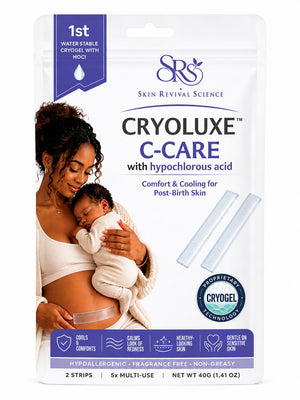
Some moms like adding a light layer of comfort to this area as part of a broader postpartum skin care routine, once the incision has fully closed. Cryoluxe's C-Care cryogels are designed for cooling comfort and gentle hydration on sensitive post-birth skin. They are a cosmetic step for how skin feels, not a way to change the shape of the shelf itself. Cryoluxe products cool, comfort, hydrate, and support the look and feel of healthy skin, and are not intended to diagnose, treat, cure, or prevent any condition.
However this area settles for you, it says nothing about how well you are recovering or how well you are doing as a new mom.
Frequently Asked Questions
Will the C-section shelf go away?
For many moms, it softens and becomes less noticeable over the first six to twelve months as swelling settles and the scar tissue matures. For others, it stays about the same well past that point. Both outcomes are normal and depend on how tissue settles and skin elasticity, not effort.
Why do some people get a C-section shelf?
It largely comes down to how the deeper layer of tissue closed during surgery and how elastic skin was beforehand, not something a person did or did not do. A first C-section and a repeat C-section can settle differently, and it shows up across every body size.
How do you avoid getting a C-section shelf?
There is no guaranteed way to prevent it, since it depends mostly on how deeper tissue layers close and settle, which skin care cannot control. Gently caring for the incision while it closes and following your surgical team's guidance afterward are the things actually within your control.
What is the shelf effect after a C-section?
It is the soft, shelf-like fold of skin that can sit above a C-section scar once the incision has closed. It happens because skin above the scar was stretched by pregnancy while the incision line itself settles tighter, creating a visible contrast between the two areas.