Under-Eye Gels: What to Look For in a Good One

An eye gel promises a lot from a small tube: a cooler, brighter, less puffy-looking under-eye area in the time it takes to finish your coffee. Walk down any skincare aisle and half of them look interchangeable, with the same vague words on the label. Knowing what actually separates a good one from a forgettable one makes the next purchase a lot easier to get right.
Eye Gel or Eye Cream: What Actually Separates Them
An eye gel is one of three common formats for the under-eye area, alongside cream and the more occasion-specific patch. A gel is water-based rather than oil-based, so it feels lighter, absorbs faster, and layers under makeup without pilling. A cream leans on emollients like shea butter or plant oils, which sit on the skin longer and feel more like a cushion than a splash of water.
That difference in base changes who reaches for which. People with oily or combination skin, or anyone applying makeup soon after, tend to prefer a gel because it disappears quickly and does not add extra shine. Drier or more mature skin often does better with a cream, since the thicker base holds moisture in place longer through the day. Plenty of people simply split the difference: a gel in the morning under makeup, a richer cream at night.
It usually comes in a squeeze tube or pump rather than the single-use sachets built for under-eye patches. That makes it fit into a daily routine more naturally, since a patch works better as an occasional reset.
What to Look for in an Eye Gel: Ingredients That Matter
The ingredient list tells you more about an eye gel than the marketing copy on the box. A few ingredients show up again and again for good reason.
- Hyaluronic acid and other humectants. Hyaluronic acid is a humectant that can bind more than a thousand times its own weight in water. That is why it appears in nearly every formula on the shelf. It pulls moisture to the surface of the skin, making the area look smoother and less crepey within minutes.
- Caffeine. Caffeine is a well-known vasoconstrictor, meaning it gently tightens the small blood vessels close to the skin's surface. That is the mechanism behind a lot of the de-puffing claims on the label, though the effect is mild and short-lived rather than dramatic.
- Peptides. These are small chains of amino acids that signal skin to keep supporting its own structure. Peptides work more gradually than hyaluronic acid or caffeine, so think of them as a longer-term addition rather than something you will notice by tomorrow.
- Fragrance-free formulas. Skin under the eyes is thinner than skin almost anywhere else on the face, which makes it more reactive to added fragrance. A fragrance-free formula is a safer default, especially for anyone who has been irritated by other eye products before.
Some formulas lean on flashier ingredients, like the gold flecks used in gold under-eye patches, that photograph well without much evidence behind them. A shorter, more familiar ingredient list is usually the better sign.
What It Can Realistically Do
An eye gel earns its place through two mechanisms working together: temporary hydration and a cooling sensation. Both make the under-eye area look calmer and more awake within minutes, and that fresher look can last a few hours before skin settles back to its normal state. That is a real, honest benefit, not a small one on a tired morning.
What it cannot do is change the structure underneath the skin. Genetics play a large role in how the under-eye area looks over time. Thinning skin, a deeper tear trough, and shifting fat pads are frequently inherited traits that show up with age, and no amount of topical hydration will undo them. If shadows or hollows under your eyes bother you and a gel is not moving the needle, that is worth a conversation with a dermatologist. It is not a reason to keep buying stronger gels.
Set the expectation from the start and this small ritual becomes much more satisfying to use. It refreshes the look of tired skin for a few hours at a time. It does not rebuild lost volume or permanently change what is happening structurally underneath.
How to Apply It for the Best Result
Technique matters almost as much as the formula. A small amount goes further than people expect, since skin under the eyes cannot absorb much at once.
- Chill it first if you can. A few minutes in the fridge, or choosing a gel that already feels cool out of the tube, adds to the de-puffing effect from the start.
- Use your ring finger. It naturally applies the lightest pressure of the five fingers, which matters on skin this thin.
- Pat, do not rub. Tap the gel gently along the bone under the eye rather than dragging it across the skin.
- Let it absorb before makeup. Give it a minute or two so it does not pill under concealer.
None of this takes more than a minute once it becomes a habit, which matters on the mornings when a minute is genuinely all there is.
Where a Cooling Cryogel Fits the Format
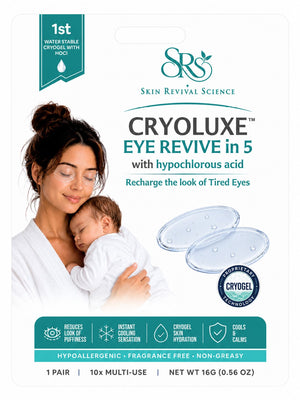
A newer option on the shelf is the water-stable cryogel: a soft, water-rich gel built to hold a cooling sensation more consistently than a standard gel or single-use patch. Cryoluxe's Eye Revive in 5 is a five-minute cryogel ritual built for exactly this use, refreshing tired-looking eyes and reducing the look of puffiness. Because the cryogel matrix is water-stable, the pad can be rinsed and reused, and it does not need refrigeration to work, though chilling it first adds an extra cooling boost.
Cryoluxe products are cosmetics, designed to cool, comfort, hydrate, and support the look and feel of healthy skin. They are not intended to diagnose, treat, cure, or prevent any condition.
Whether you reach for a tube, a jar, or a reusable pad, the format matters less than the two things doing the actual work: hydration and cooling. Look for a product that delivers both without a long ingredient list of things you cannot pronounce.
Frequently Asked Questions
Which is better, under-eye cream or gel?
Neither is universally better. A gel is lighter, water-based, and absorbs fast, which suits oily or combination skin and morning makeup routines. A cream is richer and holds moisture longer, which suits drier or more mature skin. Many people use a gel in the morning and a cream at night.
Does anything actually work for under-eye bags?
Cooling and hydrating products can genuinely calm the look of puffiness and refresh tired-looking skin for a few hours. What they cannot do is reverse a structural cause like a deep tear trough or fat pad shift. Persistent bags are worth discussing with a dermatologist rather than chasing with more product.
When should I apply eye gel in my routine?
Apply eye gel after cleansing and any water-based serum, but before heavier creams or sunscreen. It needs clean, slightly damp skin to absorb well. Give it a minute or two to sink in before layering makeup or SPF on top so nothing pills or slides.
Can you refrigerate an eye gel?
Most eye gels handle refrigeration fine and many people prefer it, since a cold temperature adds an extra cooling effect on application. It is not required for the formula to work. A reusable cryogel pad, by contrast, does not need refrigeration at all, though chilling it first gives an extra-cool feel.
The right eye gel comes down to a short ingredient list, a texture that fits your skin, and honest expectations about what a few minutes of cooling hydration can do. Get those three things right, and the rest is just finding a texture worth reaching for every morning.