Under-Eye Patches When You Wear Glasses: A Practical Guide

It's six in the morning, the baby is finally back asleep, and Lauren reaches for her glasses before her eyes even focus. In the mirror, the tired look under her eyes is impossible to miss. She wants to press on a patch before the day starts. She's never been sure an eye patch for glasses actually fits with the frames she's about to put back on. It does, once you know where patches sit and how to time them.
One quick note before the practical stuff. If you or your child wears a prescribed occlusion patch for amblyopia, sometimes called a lazy eye, this guide is not about that. Medical patches are worn on a doctor's schedule, often for hours a day, and how they interact with glasses is a conversation for an eye-care professional. Everything from here on is about the cosmetic kind: soft gel patches used for tired-looking, puffy-looking under-eyes.
Do Under-Eye Patches Fit Under Glasses Frames?
Most days, yes. Under-eye patches sit low, against the hollow beneath your eye and the top of your cheekbone. Glasses frames rest higher, along the bridge of your nose and across your temples. On an average frame, there's enough clearance that a patch never touches the lens or the lower rim.
The exception is very low or oversized frames, the kind that dip well below the eye. If your glasses ride low on your nose, check where the bottom rim actually lands before you press a patch into place. A patch trimmed close to your natural under-eye curve, rather than one cut wide toward the cheek, is the safer choice for any frame style.
Choosing the Right Eye Patch for Glasses Wearers
Not every patch behaves the same way once frames go back on. A few details make one style easier to live with:
- Low profile. A thin hydrogel or bio-cellulose sheet lies flat against skin. A thick, cushioned patch or one with a stiff plastic backing is more likely to catch on a nose pad or the lower rim.
- A trimmed inner edge. Patches cut close to the inner corner of the eye, rather than reaching toward the bridge of the nose, stay clear of where glasses actually rest.
- A snug, conforming fit. A patch that grips skin instead of sliding won't migrate toward your frames while you go about your morning.
This is really the same idea behind how under-eye patches work in general: the material has to hold still against a curved, moving part of the face. Add a pair of glasses to the mix and that grip matters even more. Even a decorative option like a gold under-eye patch has to pass the same test, since the shimmer changes nothing about how it sits under a frame.
Wearing Patches While You Work or Read With Glasses On
You don't have to disappear into a dark room for a patch to do its job. If the fit is snug and low profile, you can put your glasses back on right away. Answer email, read the news, or help with breakfast while the patch sits in place. The main thing to watch is how often your frames slide down and get pushed back up. Repeated nudging near the inner corner can work a patch loose faster than it would loosen on its own.
If you wear progressive or reading glasses that sit lower on the nose for close work, take them off for the patch's full sit time. Put them back on once you peel the patch away. That short break can double as an actual pause in the day, not just a skincare step squeezed in around everything else.
Will a Cooling Patch Make Your Glasses Slip?
A cooling gel patch won't fog your lenses the way a mask does. Fogging happens when warm breath escapes upward past the bridge of the nose, and a patch sitting below the eye has nothing to do with your breath. What can happen is a bit of slip. Gel and bio-cellulose patches leave a thin layer of moisture on the skin. If you set your glasses back on before that moisture dries, the nose pads can slide instead of grip.
There's an easy way around it. Blot gently with a clean tissue after you peel the patch off, wait a minute until skin feels dry rather than damp, then put glasses back on. It takes seconds and saves you from pushing your frames up every few minutes for the rest of the morning.
Timing Your Patch Session Around Your Glasses Routine
Under-eye patches work best early in the routine, before makeup and, ideally, before glasses go back on for the day. That lines up with the order dermatologists generally recommend to apply skincare products: cleanse first, then treatments like a patch, then moisturizer, then makeup last.
A five to twenty minute window is enough for most patches to do their work. That could be the time spent making coffee, packing a bag, or just sitting still for once. Glasses off during that stretch keeps frames from nudging the patch. Glasses back on right after, once skin feels dry, finishes the routine without adding an extra step to an already full morning.
Low-Profile Formats That Actually Work Under Frames
The best eye patch for glasses is simply the one that stays exactly where you put it. Look for patches described as thin, gel-based, or contoured rather than cushioned or gel-cream filled. A patch that comes to a sharp point at the inner corner, rather than a rounded blob, tucks closer to the nose without crowding a nose pad. Reusable cryogel patches tend to run thinner than single-use hydrogel pairs, since they're built to conform and hold shape through repeat use rather than swell with extra serum.
Where Eye Revive in 5 Fits Into a Glasses Routine
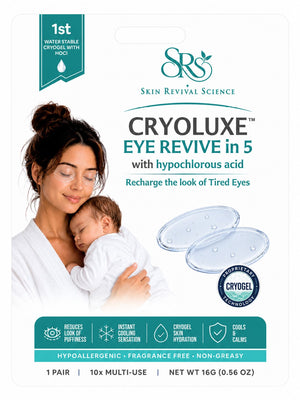
This is the exact routine Eye Revive in 5 was built for. The cryogel patches conform to the curve under the eye with no clips or straps to fuss with. There's nothing rigid to catch on a frame whenever glasses go back on. The five-minute ritual works whether glasses come off entirely during the sit time or stay within reach for right after.
Cryoluxe products are cosmetics, designed to cool, comfort, hydrate, and support the look and feel of healthy skin. They are not intended to diagnose, treat, cure, or prevent any condition.
Making the Combination Work Every Morning
Glasses and under-eye patches are not in conflict. They just need a little sequencing. Patches sit low enough to clear most frames, and a low-profile shape avoids the nose pads. A minute of drying time keeps everything from slipping once glasses go back on.
That's the same routine Eye Revive in 5 is built around, five minutes that work with or without frames. It's a reusable cryogel pad instead of a single-use pair, one less thing to think about before the glasses go back on and the day actually starts.
Frequently Asked Questions
What eye patch works with glasses?
A low-profile hydrogel or cryogel patch that lies flat and stays trimmed away from the nose bridge works best. Avoid thick, cushioned patches or ones with a stiff backing, since those are more likely to catch on a nose pad or the lower rim of a frame.
How should you wear under-eye patches?
Cleanse first, then press the patch onto clean, dry skin so it lies flat against the curve under the eye. Leave it in place for five to twenty minutes, remove it, gently pat in any leftover serum, and let skin dry before glasses or makeup go back on.
Is it okay to wear an eye patch all day?
Not for the cosmetic kind. Most gel and cryogel patches are meant for a single ten to twenty minute sit, not all-day wear. All-day patching is the medical kind, used for conditions like amblyopia under a doctor's guidance, not a skincare routine.
Can I put my glasses back on right after removing a patch?
Yes, once skin no longer feels damp. Gently blot the area with a tissue after removing the patch, wait about a minute, then put glasses back on as usual. Skipping that step is the main reason frames feel like they're sliding right after.