Caring for the Look of Stretch Marks in Pregnancy: What the Options Are

If you've searched for the best stretch mark cream during pregnancy, you deserve the honest answer before you spend a dollar on one. No cream, oil, or serum has been reliably shown to prevent stretch marks from forming. That is not what most product pages lead with, but it is what the evidence actually shows. It is not a reason to skip the moisturizer aisle. It is a reason to shop for the right reasons: comfort on stretching skin, a daily ritual that feels good, and ingredients you are comfortable using while pregnant.
A quick note before we get into it: this is general education, not medical advice for your specific pregnancy. Every pregnancy is different, so check with your OB, midwife, or dermatologist before starting or stopping anything in your skincare routine, especially in the first trimester.
Is There a Best Stretch Mark Cream for Pregnancy? The Honest Answer
Here is the short version. A review of the research from the Cochrane Library looked at six trials and roughly 800 pregnant women testing topical preparations. The products included vitamin E, hyaluronic acid, and cocoa butter. The reviewers found no high-quality evidence that any of them prevented stretch marks better than a plain moisturizer or no product at all.
That is a hard thing to hear while standing in front of a shelf of products promising otherwise. It lines up with what dermatology sources generally say. Whether you develop stretch marks, and how many, comes down mostly to genetics, your skin type, and how quickly your skin is asked to stretch. Some skin has more natural give. Other skin does not, no matter what gets rubbed on it. A cream cannot rewrite that.
Why Stretch Marks Show Up in the First Place
Stretch marks form when the dermis, the skin's middle layer, stretches faster than it can comfortably adapt. The collagen and elastin fibers that give skin its stretch and snap-back get pulled past their limit, leaving thin, streak-like lines behind.
Pregnancy is one of the most common triggers, since a growing belly can expand quickly, especially in the third trimester. Family history plays a role too. If your mother or sister developed stretch marks, you are more likely to as well. Hormonal shifts during pregnancy can also make skin more prone to them. None of this means you did something wrong. It is closer to genetics doing its own thing to your bump.
What Moisturizing Actually Does for Stretching Skin
If a cream cannot prevent stretch marks, is there still a reason to moisturize? Yes, just a more honest one. Skin that is stretching quickly can feel tight, dry, and itchy, especially across the belly in the second and third trimester. A rich moisturizer applied daily can genuinely comfort that feeling and support the look and feel of hydrated skin.
Think of these ingredient families as comfort choices rather than prevention tools.
- Cocoa or shea butter. Heavy, occlusive butters that sit on the skin's surface and help it hold onto moisture, which can ease that tight, stretched sensation.
- Plant oils, like sweet almond or jojoba oil. Lighter textures that sink in fast, good for a quick habit you will actually keep up with daily.
- Hyaluronic acid. A humectant that draws water into the skin, which can make the belly feel more supple between applications.
None of these change whether marks form. What they change is how your skin feels while it does the stretching, and that is worth something on its own.
What to Look for When You're Choosing a Product
Since no ingredient list guarantees prevention, choose based on what you can actually verify and what you will enjoy using enough to keep up daily.
- Fragrance-free. Added fragrance is a common irritant, and pregnancy can make skin more reactive to scents you used to tolerate just fine.
- A pregnancy-friendly ingredient list. Read past the front-of-bottle claims and check the actual ingredients. It's the same habit worth building when picking a gentle cleanser for pregnancy, or anything else that touches your skin daily.
- A texture you'll actually use. The best product is the one you'll apply every day. A lighter lotion you'll use consistently beats a heavier formula that ends up sitting unused in a drawer.
What to Skip While You're Pregnant
Most stretch mark and belly creams are fine to use during pregnancy, but a few "repair" or anti-aging products cross into ingredients worth pausing. Retinoid-containing serums and creams, the kind marketed for fine lines or skin renewal, are generally recommended to sit out until after pregnancy and breastfeeding. If you are also weighing other active ingredients in your routine, like glycolic acid, the same rule applies. Bring the full ingredient list to your OB or dermatologist rather than guessing from the label alone. It is a five-minute conversation that saves you from wondering later.
How Stretch Marks Usually Change After Birth
Stretch marks are not static. When they first appear, they tend to look red, purple, pink, or darker than the surrounding skin, depending on your skin tone, and they can feel slightly raised or itchy. That early appearance is normal and extremely common. Around 8 out of 10 pregnant women develop some degree of stretch marks, so if you have them, you are in the majority, not the exception.
Over the months and years after birth, most marks gradually fade to paler, thinner lines that are far less noticeable than they were during pregnancy. They rarely disappear completely, but the shift in how visible they become is real and well documented.
If you are curious about options for how they look further down the road, that is a conversation for a dermatologist once you are postpartum. It is not something to plan around now. There is no shame either way in how your skin looks after growing a person.
What This Means for You
The best stretch mark cream during pregnancy is not a specific bottle. It is whichever fragrance-free, pregnancy-friendly product feels good enough on your skin that you will actually use it through the second and third trimester. Buy it for the comfort, the ritual, and the hydrated feel, not a promise about marks that no product on the shelf can actually keep.
If marks show up anyway, and for most people they do, that is biology working as expected. It is not a sign you picked the wrong cream or did not try hard enough.
Frequently Asked Questions
What is the best stretch mark cream for pregnancy?
There is not one winning product, since no cream has reliably been shown to prevent stretch marks from forming. Choose based on what you will actually use consistently: fragrance-free, a pregnancy-friendly ingredient list, and a texture that feels good on daily, stretching skin. Pick it for that, not the boldest claim on the label.
Is stretch mark cream safe during pregnancy?
Most moisturizers, oils, and butters are fine, since pregnancy skincare is mostly about what you avoid rather than what you add. Skip retinoid-containing "repair" products and check any active ingredients with your OB or dermatologist. Stick to fragrance-free, pregnancy-friendly formulas with a label you can actually read.
Do stretch marks fade after pregnancy?
Yes, for most people. Stretch marks typically start red, purple, or darker than surrounding skin, then gradually fade to paler, thinner lines over the months and years after birth. They rarely disappear completely, but they usually become far less noticeable than they were during pregnancy.
When do stretch marks usually appear during pregnancy?
Most often in the second or third trimester, as the belly stretches quickly to accommodate a growing baby. Timing and severity vary a lot by person, since genetics, skin type, and family history play a bigger role than the exact week your bump grows.
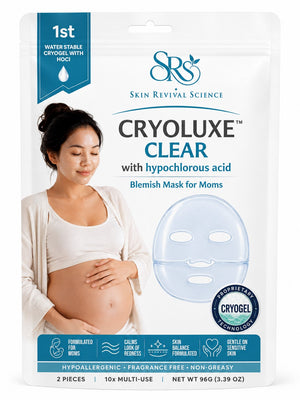
Reading past the front-of-bottle promises is a habit worth keeping well beyond stretch marks. Cryoluxe does not make a stretch mark cream, but the same standard applies across the line: fragrance-free formulas and transparent ingredient lists, nothing hidden behind a marketing claim. Cosmetic products like these comfort, hydrate, and support the way skin looks and feels. They are not intended to diagnose, treat, cure, or prevent any condition, stretch marks included. Whatever you choose for your belly this trimester, choose it because it feels good on your skin, not because a label promised something no cream can guarantee.