Caring for Your C-Section Scar's Appearance as Skin Recovers

C-section scars are common, and what they look like in the early weeks rarely matches how they will look months later. If you had a C-section, the horizontal line low on your belly is likely pink or red at first. The skin around it can feel tight or itchy as it recovers, which is a normal part of the process, not a sign anything is wrong.
This guide covers what C-section scars typically look like over time and what affects how a scar's appearance settles. It also covers gentle, provider-approved ways to care for the skin around it once you are cleared to.
What C-Section Scars Typically Look Like at First
In the first few weeks, a C-section scar is usually pink to red and sometimes slightly raised. It follows the horizontal cut low on the abdomen, just below the bikini line. Many moms notice the area feels tight, itchy, or a little numb near the incision line as skin and nerves settle.
The exact length and shape depend on the surgery itself. The overall pattern, from a more vivid line early on to something quieter later, is typical for most C-sections.
None of this reflects how carefully anyone cared for the incision while it closed. It is simply how skin looks in the early stage of recovery, and it changes on its own timeline.
How C-Section Scars Change in Appearance Over Time
As the weeks pass, most C-section scars gradually move from a vivid pink or red toward a paler, flatter line. This is part of a natural process sometimes called scar remodeling, where the body reorganizes the collagen in the area. A review of postsurgical scar care found that this remodeling can continue for up to a year after surgery. The most visible change tends to happen in the first several months, with smaller shifts continuing quietly after that.
It is common for a C-section scar to still be gradually settling well past the one-year mark. That is not a sign of anything going wrong. It is just a slower stretch of the same process.
What Affects How a C-Section Scar's Appearance Settles
A few different things shape how a scar ultimately looks, and most of them are outside anyone's control.
- Skin tone. The NHS notes that on darker skin, a C-section scar may fade to leave a brown or white mark. It may not blend fully into the surrounding skin tone.
- Genetics. Some people's skin naturally settles into a flatter, paler scar, while others are more prone to a raised or thickened one, regardless of aftercare.
- Incision type. Most C-sections use a low, horizontal cut, which tends to settle more quietly than a vertical incision.
- Repeat surgery. A second or third C-section along the same line can look different from a first scar. That's because it forms through tissue that has already been cut once before.
None of these factors reflect effort or self-care. They are simply biology.
Before Any Appearance Care, Wait for Your Provider's Green Light
Nothing described in this article applies until your incision has fully closed, usually around six to eight weeks after birth. It also waits until your OB-GYN or midwife has confirmed you are ready for more than basic cleansing. Every recovery timeline is different. Some incisions close faster, some take longer, and some need extra attention along the way.
Your provider is the one who can tell you when the skin over your scar is ready for lotion, sun exposure, or anything beyond what your discharge instructions already cover. If the area looks different than expected, changes suddenly, or does not seem to be settling the way it has been, call your provider rather than waiting it out.
Gentle Ways to Care for the Skin Around Your Scar
Once your incision is fully closed and your provider says you are ready, a few simple habits can support how the area looks and feels while it continues to settle.
- Keep it simply hydrated. A fragrance-free lotion or gel can help skin feel more comfortable if it's tight or dry as it continues to recover.
- Protect the scar line from the sun. Newly settled skin is especially reactive to sun exposure, and unprotected sun can darken the scar's look instead of letting it fade. The American Academy of Dermatology recommends a broad-spectrum sunscreen of at least SPF 30 on the area whenever it isn't covered by clothing.
- Ask about silicone sheets or gels. Some moms try these once their provider says the incision is ready. A Cochrane review of the research rated the evidence as low to very low certainty. That means the studies so far are too small or inconsistent to say definitively how much silicone sheeting changes a scar's appearance. It's worth asking your provider whether it's a fit for you.
- Ask about scar massage. Many providers suggest scar massage once the incision is fully closed, often starting around six to eight weeks after birth. It's said to help the area feel more comfortable and mobile over time. This is exactly the kind of thing to bring up directly with your provider, since timing and technique depend on your specific recovery.
A Note on C-Care
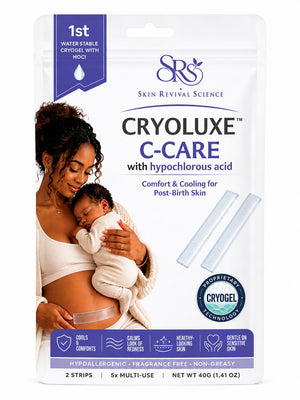
Some moms like adding a light layer of comfort to this area once their provider confirms they're ready. Cryoluxe's C-Care cryogels are designed for cooling comfort and gentle hydration on sensitive post-birth skin. They are a cosmetic step for how skin feels day to day, not a way to change how the scar itself looks. Cryoluxe products cool, comfort, hydrate, and support the look and feel of healthy skin, and are not intended to diagnose, treat, cure, or prevent any condition.
What This Means for You
A C-section scar is a normal part of how your body brought your baby into the world, not a problem to solve on any deadline. Some moms also notice a soft fold of skin above the scar, known as the C-section shelf. It's a separate and equally normal part of how this area settles.
Whether you want to give the area a little extra attention or would rather not think about it at all, both are completely reasonable choices. Many moms lean on perineal ice packs for a different kind of comfort in early recovery. The skin around a C-section scar responds well to that same patient, gentle pace.
However your scar's appearance settles, it says nothing about how well you are recovering or how well you are doing as a new mom.
Frequently Asked Questions
What helps a C-section scar's appearance as it recovers?
Time does most of the work. Most scars gradually move from pink or red toward a flatter, paler line over months. Gentle hydration and consistent sun protection, once your provider clears the area, can support how it looks. No product makes a C-section scar recover or fade faster than skin naturally does.
How long does a C-section scar take to fade?
There is no single timeline. Many C-section scars look noticeably paler and flatter within six to twelve months, and the look often continues to soften subtly well past that first year. Skin tone, genetics, and incision type all influence the pace, so comparing your timeline to someone else's isn't very useful.
How do you care for the appearance of a C-section scar?
Once your provider confirms the incision is fully closed, gentle care means keeping the area clean and adding a fragrance-free lotion if it's dry or tight. Use sunscreen on the scar line when it's exposed. Ask your provider before adding scar massage or silicone products.
Do silicone sheets help the look of C-section scars?
They might help a little, but the evidence is limited. A Cochrane review of silicone gel sheeting found the certainty of the research was low to very low, so results are inconsistent. Some providers still suggest trying them once the incision is closed. Ask yours whether it makes sense for your recovery.