Dry, Tight Under-Eyes? How to Rehydrate the Delicate Skin

The skin under your eyes can go from fine to flaky in a single week of dry heating, and by morning it feels tight the second you blink. Dry under-eye skin is one of the most common complaints dermatologists hear once the seasons turn. For a lot of new moms, it shows up right alongside the broken sleep. The good news is that it responds quickly to the right routine, once you understand why this small stretch of skin dries out faster than the rest of your face.
Why Dry Under-Eye Skin Happens in the First Place
The skin around your eyes is not built like the rest of your face. It is the thinnest skin on your body. A 2026 study in Frontiers in Aging found that periorbital skin also has fewer sweat and sebaceous glands than the cheeks or forehead. That limits how much natural oil it produces to hold moisture in. That combination makes it the first place dryness shows up and often the last place it recovers on its own.
A few things tend to push it over the edge:
- Indoor heating and air conditioning. Both pull moisture out of the air, and this area feels it before anywhere else on your face.
- Wind and cold. Outdoor exposure strips surface hydration faster than thin skin can replace it.
- Harsh actives from elsewhere on your face. A retinol or exfoliating acid applied to your cheeks or forehead can migrate toward the eye area during the day, even if you never apply it there directly.
- Over-cleansing. Scrubbing with a washcloth or using a foaming cleanser meant for oilier skin strips away what little natural oil this area has to begin with.
On a newborn's schedule, plain dehydration adds to all of it. Skipped meals, broken sleep, and a water bottle that sits untouched on the counter tend to show up on the face before anywhere else. The skin under your eyes is usually the first place to register it.
How to Rehydrate the Delicate Skin Under Your Eyes
Once you know what is stripping moisture from this area, rehydrating it is mostly about undoing that damage and then keeping water in place.
- Cleanse gently. Lukewarm water and a gentle cleanser do less damage than a hot shower and a foaming wash. Hot water and harsh soap strip away the oil this area can least afford to lose.
- Reach for a humectant. Hyaluronic acid is the ingredient behind most under-eye gel formulas, and for good reason: it draws water into the surface layer of skin instead of sitting on top of it. Press a few drops into damp skin rather than rubbing it in.
- Seal it in with a moisturizer. Humectants pull water toward the skin, but they need a barrier to stop that water from evaporating again. A fragrance-free eye cream, or the same moisturizer you already use on the rest of your face, locks that hydration in place when applied while skin is still damp.
- Try a cool gel format for a fast reset. Some mornings, tight, dry skin needs something right away rather than a full routine. A chilled under-eye patch or cryogel delivers a burst of cooling, water-based hydration in a few minutes.
- Keep it fragrance-free. Skin this thin reacts more easily to added fragrance than skin almost anywhere else on your face. A fragrance-free formula is a safer default, especially if an eye product has irritated you before.
Cleansing, humectants, and a moisturizer handle the daily baseline. A cool gel or patch is the occasional reset for a morning when the mirror is not being kind.
Habits That Help From the Outside In
A few habits outside the skincare routine make a real difference too. A humidifier in the bedroom or nursery adds moisture back into air that heating or air conditioning has dried out overnight. That matters most while a newborn's schedule already has you running on less sleep than usual. Drinking water consistently through the day supports your skin generally, even though it works more slowly than a topical humectant does. On windy or freezing days, pulling a scarf up over the lower half of your face cuts down on how much cold air reaches this thin skin directly.
When Dry Skin Needs More Than Moisturizer
Most dry, tight under-eye skin responds well to a gentler routine within a week or two. If it does not, or the skin stays flaky, red, or noticeably irritated no matter what you try, another jar of cream is not the answer. That is worth a conversation with a dermatologist instead. Conditions like eczema can show up in this area, and a professional can tell the difference between ordinary dryness and something that needs a different kind of attention.
Where Cryoluxe's Eye Revive in 5 Fits In
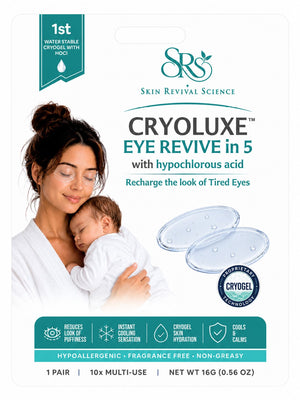
Cryoluxe's Eye Revive in 5 is built for exactly the kind of reset described above. It is a cooling, water-rich cryogel ritual for the look and feel of refreshed hydration, not a leave-on product you have to remember every day. It runs on Cryoluxe's Hypochlorous Acid water-stable cryogel technology, the 1st water-stable cryogel with Hypochlorous Acid, so the formula stays cool and consistent from the first use to the last. Each pad needs no refrigeration, though it can be chilled ahead of time for an extra-cool feel. It can be reused up to ten times: open it, apply it for five minutes, then rinse with cool water and return it to its resealable pouch.
Cryoluxe products are cosmetics, designed to cool, comfort, hydrate, and support the look and feel of healthy skin. They are not intended to diagnose, treat, cure, or prevent any condition.
Making It Part of Your Routine
Dry, tight under-eye skin is common, and it responds fast once the real causes get addressed instead of guessed at. A gentler cleanser, a humectant, a moisturizer to seal it in, and a cooling ritual for the mornings that need more than that combination cover almost every case. For the five-minute version of that cooling reset, Cryoluxe's Eye Revive in 5 offers a reusable ritual built around the parts that genuinely help this delicate skin feel hydrated again.
Frequently Asked Questions
How do you get rid of dry skin under your eyes?
Start with a gentle, fragrance-free cleanser instead of a foaming wash, then pat on a hyaluronic acid serum while skin is still damp. Seal it with a moisturizer or eye cream within a minute so the water stays put. A cool gel or patch adds a quick reset when the tightness feels immediate.
Why is underneath my eye so dry?
The skin under your eyes is the thinnest on your face and has far fewer oil-producing glands than your cheeks or forehead, so it holds onto moisture poorly. Add dry indoor heat, over-cleansing, or a broken sleep schedule, and dry under-eye skin becomes the first place your face shows it.
What vitamin deficiency causes dry skin under eyes?
Vitamin deficiencies are an uncommon cause of dry under-eye skin, and they mostly show up in people with restrictive diets or absorption issues, not the general population. Most dryness here traces back to weather, over-cleansing, or thinning skin with age. If you suspect a deficiency, talk to a healthcare provider rather than guessing with supplements.
Does drinking more water help dry under-eye skin?
It helps, but only as part of the picture. Overall hydration supports your skin generally, while topical humectants and a moisturizer address surface dryness directly. Pair water intake with a gentle routine and a humidifier in dry rooms for the most noticeable difference under your eyes.