Itchy Skin While Breastfeeding: Common Causes and Comfort

Itchy skin while breastfeeding shows up in more places than most new moms expect. It is not only your chest. Dry patches on your arms, tight skin after a shower, hands that itch from constant washing: the months after birth can leave skin feeling different everywhere. Most of this has simple, explainable causes, and a few small habits make a real difference. Here is what is actually going on and what tends to help.
What Causes Itchy Skin While Breastfeeding
Your body goes through a fast hormone shift in the days after delivery. Levels that stayed elevated all through pregnancy drop quickly, and skin often ends up holding onto less moisture than it used to. That alone can leave skin all over your body feeling drier and more reactive than before, not only around your chest.
This is different from itching that concentrates specifically on the breasts. If that is where you notice it most, stretching skin, nursing pads, and bra friction are usually the bigger factors. Itchy Breasts While Nursing walks through those causes in more depth. This article focuses on the itch that shows up everywhere else too: arms, legs, hands, and beyond.
Nursing Asks a Lot of Your Body's Fluid
Making milk takes a significant amount of water, more than almost any other daily function your body handles right now. Many moms notice a rush of thirst the moment their baby latches, a nudge to keep drinking through the feed.
When fluid intake does not quite keep pace with what nursing uses, skin is often one of the first places to show it. Skin that is not getting enough water from the inside tends to feel tighter, flakier, and itchier than usual. Keeping a water bottle within reach during feeds is a simple habit that helps more than it might seem.
Showers, Soap, and Hand Washing Add Up
Hot water feels good after a long day, but it works against you here. Hot water and strong soap strip away natural oils fast. The American Academy of Dermatology points to shorter, lukewarm showers as one of the simplest ways to protect the skin's moisture barrier.
Hands take an extra hit right now too. Between diaper changes, bottle washing, and reaching for sanitizer throughout the day, new moms wash and sanitize their hands far more than they used to. Each wash strips a little more of the skin's natural protection, which is why hands are often the itchiest, driest part of the whole body in the early months.
A gentle, fragrance-free cleanser makes a real difference here, both in the shower and at the sink. Look for something that cleans without stripping, one of the simplest habits for calming itchy skin while breastfeeding through this stretch.
Night Sweats Leave Salt Behind
Night sweats are common in the weeks after birth, driven by the same hormone shift that affects skin elsewhere. Sweat that dries on skin overnight can leave a light, salty film behind, and that residue is often enough to trigger an itch by morning.
A quick rinse with cool water first thing helps clear it before it settles in. Breathable, lightweight sleepwear helps too, since it gives sweat somewhere to go instead of trapping it against skin overnight.
Laundry, Fabric, and the Fog of Exhaustion
New routines mean new fabrics touching your skin more often: nursing tanks, burp cloths, swaddles, and far more laundry than usual. A stronger detergent or extra fragrance in the wash can be enough to set off itching in skin that is already more sensitive than usual. NHS guidance on itchy skin recommends switching to a sensitive-skin laundry liquid and skipping fabric softener when skin feels reactive.
Exhaustion plays its own quiet role too. When you are running on little sleep, small sensations like a mildly itchy patch of skin feel more noticeable and harder to ignore than they normally would. That is not in your head. It is simply harder to tune anything out when you are this tired.
Comfort Habits That Actually Help
A few consistent habits go a long way toward calming itchy skin, wherever it shows up:
- Moisturize damp skin. Apply a fragrance-free lotion right after a shower, while skin is still damp, to help seal in moisture before it evaporates.
- Keep showers lukewarm and short. Five to ten minutes is plenty.
- Choose breathable fabrics. Cotton and other natural fibers let air move instead of trapping heat and sweat.
- Stay ahead of thirst. Sip water at each feed instead of waiting until you are parched.
- Switch to a gentle detergent. A sensitive-skin formula, free of dyes and heavy fragrance, is easier on skin that is already working hard.
None of these require a complicated routine. Small, repeatable habits tend to help more than one big overhaul.
Where Cooling Comfort Fits In
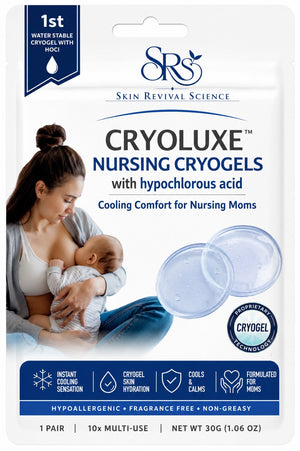
When skin feels hot, tight, and itchy, something cool can bring quick comfort. That is the idea behind Cooling Comfort for Nursing, and the same principle behind Cryoluxe's Nursing Cryogels.
Each pad is a water-stable cryogel infused with Hypochlorous Acid, delivering cooling comfort on contact for skin that feels hot, tender, or overworked. They are reusable up to ten times, need no refrigeration, and leave nothing sticky behind. Open one, apply it, relax for five to twenty minutes, then rinse and return it to its pouch.
Cryoluxe products are cosmetics, designed to cool, comfort, hydrate, and support the look and feel of healthy skin. They are not intended to diagnose, treat, cure, or prevent any condition.
When to Check In With Your Provider
Most postpartum itching is uncomfortable but ordinary, and it eases as skin and hormones settle into a new normal. A few patterns are worth a prompt call instead of waiting it out. Reach out sooner rather than later if itching feels intense or covers a lot of your body. The same goes for itching concentrated on your palms and soles, itching alongside a rash that keeps spreading, or itching that keeps you up at night.
If you are still pregnant, bring up any new itching at your next appointment, even if it seems minor. A quick conversation is the easiest way to rule things out, so you can get back to focusing on the parts of this season that actually feel good.
Settling Into More Comfortable Skin
Itchy skin while breastfeeding usually comes down to a stack of small, ordinary factors: hormones, dryness, extra washing, and not quite enough sleep. None of it means something is wrong. A gentle routine, a little more water, and something cool when skin needs it handle most of it.
Nursing Cryogels are built for exactly that kind of quiet reset, whenever your skin could use a few calm minutes.
Frequently Asked Questions
Can breastfeeding make your body itchy?
Yes. Making milk pulls significant fluid from your body, and hormone levels also shift quickly in these early months. Both changes can leave skin drier and itchier than usual, not only around your chest but across your arms, legs, and hands too. Staying hydrated and moisturizing regularly usually helps it settle.
Why is my whole body itchy postpartum?
Hormone levels drop quickly after birth, and skin often holds less moisture as a result, which can make itching show up anywhere, not just where you would expect. Add in hot showers, frequent hand washing, and night sweats, and the itch can feel widespread even though nothing is actually wrong.
How long does postpartum itching last?
For most new moms, itching tied to hormones and dryness eases within a few weeks to a couple of months, as hormone levels stabilize and new routines settle in. Staying consistent with moisturizer, hydration, and gentle products usually speeds that timeline. Itching that lingers well beyond that is worth mentioning at a checkup.