Using Glycolic Acid While Pregnant: Gentler Ways to Exfoliate

Can you use glycolic acid while pregnant, and if so, how do you actually use it without overthinking every swipe of toner? Most dermatology sources regard low-strength glycolic acid as a reasonably low-risk, pregnancy-friendly choice, and we already walked through that research in Is Glycolic Acid Safe During Pregnancy?. This piece picks up from there. It's about technique: how to exfoliate gently if you keep glycolic acid in your routine, and what to reach for instead if your skin would rather you didn't.
A quick note before we get into it: this is general education, not medical advice for your specific pregnancy. Every pregnancy is different, so check with your OB, midwife, or dermatologist before adding or continuing any active ingredient, especially in the first trimester.
Why Pregnancy Skin Reacts Differently to Acids
A product you have used for years without a second thought can suddenly sting, flush, or flake once you are pregnant. That is not your imagination. Rising estrogen and progesterone affect oil production, hydration, and how easily your skin barrier lets things in, which is part of why so many people notice new sensitivity mid-pregnancy.
None of that means glycolic acid is suddenly dangerous. It means the same product may behave differently on your skin than it did six months ago. The smart move is adjusting how you use it, not assuming nothing has changed.
How to Use Glycolic Acid Gently While Pregnant
If you are keeping glycolic acid in your routine, a few adjustments make it noticeably gentler without giving up the ingredient entirely.
- Go lower strength. A cleanser or serum under roughly 10 percent is a different exposure than a stronger leave-on product, and it gives sensitive skin less to react to.
- Use it less often. Two to three times a week is a reasonable starting point instead of nightly use, especially if your skin has become more reactive.
- Buffer with moisturizer. Applying a hydrating moisturizer right after, or mixing a drop of your glycolic product into it, softens the exposure without eliminating the ingredient.
- Patch test again. Even a product you have used safely for years is worth a small test spot before a full application, since pregnancy hormones can change how skin responds.
- Protect your skin from the sun. AHAs including glycolic acid are linked to increased sun sensitivity, so a daily broad-spectrum sunscreen matters more while you are using one, not less.
These habits will not turn a stronger product into a mild one, but they narrow the gap between "technically low risk" and "actually comfortable to use."
Gentler Exfoliation Options to Try Instead
If glycolic acid already feels like too much, or you would rather sidestep the question altogether, there is a real ladder of gentler options below it.
Lactic acid. Lactic acid is also an AHA, but its molecules are larger, so it does not penetrate skin as quickly. That slower action is why it tends to feel milder and more hydrating than glycolic acid, and it is often the first swap dermatology sources suggest for reactive skin.
Mandelic acid and PHAs. Mandelic acid and polyhydroxy acids such as gluconolactone sit even further along that same gentler spectrum. Their larger molecules work mostly on the skin's surface, which usually means less stinging and a slower, more forgiving result.
Enzyme exfoliants. Fruit-derived enzymes, like papaya or pineapple enzymes, work differently than acids. Instead of loosening bonds between cells, they break down surface protein, so they tend to feel soft rather than tingly, and they are typically used at a much lower frequency.
Konjac sponge or a soft washcloth. Sometimes the gentlest option is not a product at all. A konjac sponge or a plain soft washcloth used with warm water can lift away dulling buildup with almost no chance of irritation. It is a solid default when your skin is unpredictable.
Hydration and patience. Skin that is well hydrated tends to exfoliate itself more efficiently through normal turnover. If your skin is reactive right now, skipping active exfoliation for a stretch and focusing on moisture is a legitimate choice, not a compromise.
What to Skip While Pregnant
A few categories are worth setting aside for now rather than trying to use gently.
Retinoid-based resurfacing products are the clearest one. Topical retinoids are generally paused during pregnancy on your provider's advice, as covered in the safety article linked above, and that includes stronger at-home "resurfacing" treatments built around them. Strong at-home peel kits are worth skipping too. Anything marketed as a professional-strength peel for home use concentrates the same higher-exposure factors behind in-office peels. Nobody is supervising the process this time.
If you are eyeing anything stronger than a daily cleanser or serum, pause first. A peel, a prescription acid, or a device-based resurfacing tool is worth bringing to your OB or dermatologist before you start. That five-minute conversation is the difference between guessing and knowing.
Building a Simple, Gentle Routine
Exfoliation is one piece of a routine, not the whole thing, and the rest of your routine affects how well your skin tolerates it. Dermatology guidance on alpha hydroxy acid facial treatments generally favors nighttime application and modest frequency over daily use. That pairs naturally with a lighter overall approach during pregnancy.
That same question, what actually counts as gentle, applies to your cleanser too. If sulfates or added fragrance already make your skin protest, gentle cleansers for pregnancy walks through what to look for on a label instead of guessing.
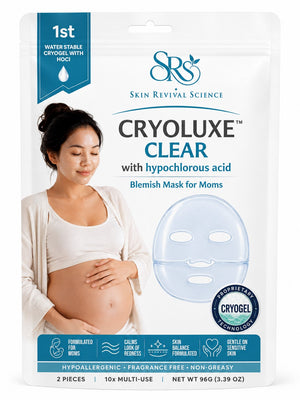
Cryoluxe does not make an exfoliating product, and that is by design. Its water-stable Hypochlorous Acid cryogels are built around cooling comfort and hydration instead. That is the kind of calm, single-purpose step that fits a simplified pregnancy routine, not one more active to manage.
Cryoluxe products are cosmetics, designed to cool, comfort, hydrate, and support the look and feel of healthy skin. They are not intended to diagnose, treat, cure, or prevent any condition.
The Simple Version
If you use glycolic acid while pregnant, keep the strength modest, use it a few times a week instead of daily, buffer it with moisturizer, and wear sunscreen. If your skin would rather skip acids altogether, lactic acid, mandelic acid, PHAs, enzyme exfoliants, and a soft konjac sponge all lead toward smoother-feeling skin with a lighter touch. Either path is reasonable. What matters is checking in with your OB or dermatologist about your specific routine, then choosing the version of gentle that actually works for your skin right now.
Frequently Asked Questions
What exfoliating acids are safe during pregnancy?
Low-concentration glycolic acid, lactic acid, mandelic acid, and PHAs are the exfoliating acids most often described as pregnancy-friendly, generally considered lower-risk when used at modest strengths and frequency. None of them are guaranteed risk-free for every pregnancy, so confirm your specific product and routine with your OB or dermatologist.
What acids are not safe during pregnancy?
High-strength salicylic acid used in professional peels and prescription-strength retinoic acid are the two most consistently flagged in dermatology guidance. Both work at concentrations far beyond anything in a drugstore bottle. If you are using either one, or considering an in-office peel, loop in your OB or dermatologist before continuing.
How often should you exfoliate while pregnant?
Less often than you might think is a reasonable default. Two to three times a week is plenty for most gentle exfoliants, and some people do better stretching that to once a week if skin feels reactive. Daily exfoliation, acid or physical, tends to backfire by leaving skin more irritated, not smoother.
What if my skin got more sensitive during pregnancy?
It's common, and it's worth listening to. Pull back to a milder exfoliant or skip acids for a while. Lean on a gentle cleanser and moisturizer, and patch test anything new before applying it to your whole face. Sensitivity in pregnancy is often temporary, so what worked before may work again later.